

Career toy chest
This is a compilation of different activities from our website and different sources that offer a fun approach to developing your career. “Fun” may not be one of the first words you associate with your personal career development, but let’s help you change that. As Mary Poppins says, “in every job that must be done, there is an element of fun. You find the fun, and SNAP! The job’s a game!” So we hope you will find plenty of fun in this toy chest.
Need a specific type of activity? Consider reviewing the below matrix for a quick summary of how these activities might benefit you:
| Reflection & Assessment | Ideation & Exploration | Planning & Time Management |
| Johari window Life roles rainbow Self-assessment Wheel of life | Ideate with LEGO Major Exploration Map your heartbreak Purpose / “Ikigai” | Eisenhower matrix Five-year resume GROW Pomodoro technique |
What is it?
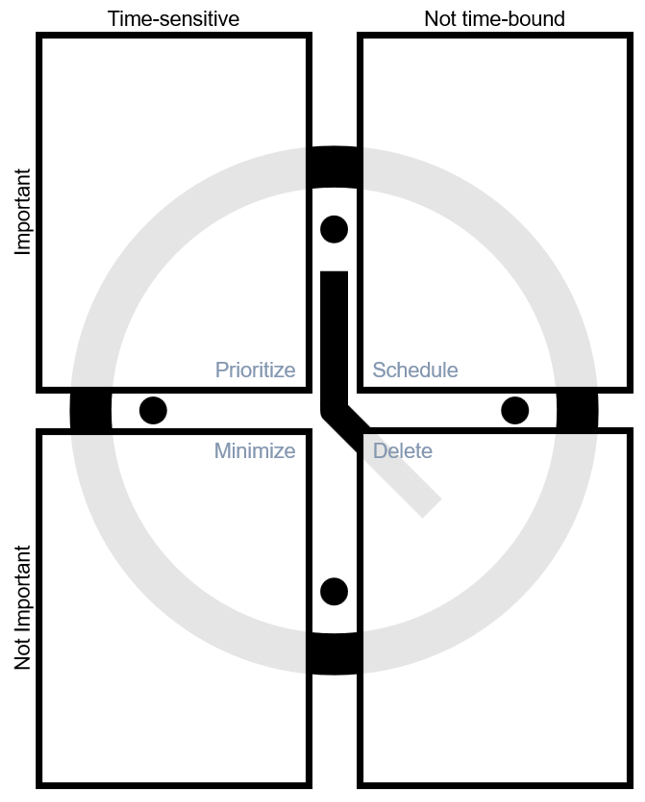
The Eisenhower Matrix is a prioritization tool designed to help individuals separate tasks across quadrants of urgency and importance. It is a useful time management tool to help you decide what tasks you will want to focus on to help you avoid distractions, overcommitment, and burnout. Although not exclusively designed for career development, setting priorities can committing to tasks are important parts of your career management.
How might it help with my career?
Sometimes professionals refer to a job search as a job unto itself, but seldom is it the only obligation you might find on your “to-do” list. By separating out tasks into things you find important and urgent, you can prioritize and attend to things that may offer the most beneficial impact for your career.
How do I use it?
As you review your to-do list, consider separating out tasks based on their level of urgency (important vs. not important) as well as their level of urgency (time-sensitive vs. not time-bound). As you distribute tasks consider the following based on their location in the four quadrants:
- Prioritize (Important & Time-sensitive): these are the tasks you will want to attend to immediately. Examples of these tasks might include responding to a request for an interview by a recruiter, or applying to a job or fellowship that has a quickly approaching deadline.
- Schedule (Important & Not Time-bound): these are tasks that may still be important, but are not quite as urgent and can potentially wait some time before addressing. For these tasks you may want to block off time on your calendar to focus on these at a later time—this way you still retain them as important but will not lose track of them. When the time comes, consider moving these tasks to the “prioritize” box. Example of these tasks might be reaching out to potential networking contacts or practicing skills you know you need to develop.
- Minimize (Not Important & Time-sensitive): these are the multitude of different tasks that might primarily distract you from your primary focus. These can include minor requests, routine tasks, or unplanned interruptions. If possible, try to delegate, automate, or ignore these tasks.
- Delete (Not Important & Not Time-bound): this quadrant contains everything else that might rob you of productivity, such as busy work, doom scrolling, or other unproductive habits. Avoid and eliminate these activities as much as possible so you can focus on the work you need to do.
Keep in mind that you might encounter some tasks related to your career that you are uncertain where to assign. In these cases, seek outside guidance or mentorship to help you prioritize as needed or wanted.
What to do beyond this exercise
Learning how to prioritize your time is a life skill that will transcend your career. Use this tool in other areas of your life, including school work, community service, and social responsibilities. You might also find it helpful to map out future tasks that are important but not time-bound (e.g. goal-setting activities, career planning, and strategic thinking), and preset time to address them.
What is it?
The five-year resume is a career planning tool that encourages you to develop a version of your resume five years into the future. Think of it as a type of “vision board” in the format of a resume. You will adjust existing parts of your resume (i.e. Education, Skills, Experience, etc.) with content you would like to achieve for yourself. See completion of a PhD in your future? Add it! See an exciting internship that you will land? Include it!
How might it help with my career?
Setting attainable goals, and then strategizing how you will achieve them, are important parts of your career development. Through developing a vision of your future career and then determining the proximal steps you need to take to get there–you can turn the vision into something realistic.
How do I use it?
What to do beyond this exercise
Setting a goal is one thing, putting in the effort to achieve it is something else entirely. Find individuals who can help keep you accountable to the goals you set: whether it is a mentor, coach, parent, partner/spouse, or friend. Likewise, as you venture toward your goal, be open to possibilities, detours, and revisions to your goals. Keeping an open mind when it comes to your career may allow you to navigate more effectively.
What is it?
The GROW Model was developed by Sir John Whitmore as a coaching tool for structuring conversations around career growth, setting goals/targets, and aid the building of action plans. You can use GROW as a way to structure your own plans. Whether you use this worksheet or not, try to integrate the steps listed as part of your planning process.
How might it help with my career?
Goal-setting is an important part of your career development, and the GROW structure helps you think about the component pieces that help make achieving that goal a success. Through connecting a main goal to your current reality by evaluating your available options, you might be able to set more proximal (or immediate) goals to help map out a successful pathway. It also helps you identify resources/supports and ideate potential barriers you might need to address along the way.
How do I use it?
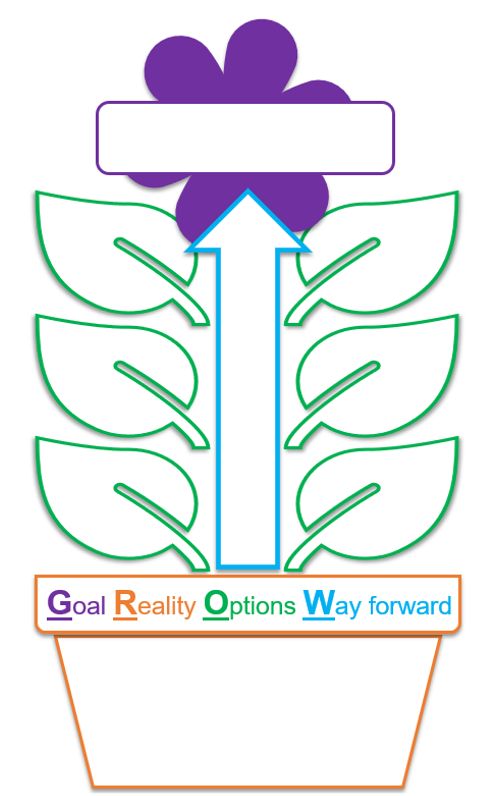
Take a moment to reflect on the different parts of the GROW model:
- Define a goal (purple flower) – indicate what is your ultimate goal. This can be a final target or a career aspiration; it can also be a short- or a long-term goal. Good goals tend to be clear, specific, meaningful, and something you can reasonably achieve in a set timeframe.
- Indicate your current reality (orange pot) – where are you now? Add details that can help set a starting point. This can include strengths/competencies you possess that will help you meet your goal. You might also add in any internal or external obstacles or challenges you are already aware of.
- Identify your options (green leaves) – ideate the different options you can explore to achieve your goal. These can include people you may want to connect with, opportunities you may want to research, courses/programs to explore, or anything else you can think of to help you meet your goal. Try to avoid imposing stringent restrictions on the options you come up with until you have had a chance to explore them a bit more.
- Establish your way forward (blue arrow) – what is your specific action plan at this moment? This can be a detailed action plan, or it can simply be identifying your very first step.
In the space around the potted flower feel free to add in additional details such as ways you would like to stay accountable, timelines and deadlines, or any resources/supports that can aid you on your way to your goal.
What to do beyond this exercise
Goal-setting is a particularly helpful tool, but you may need to be careful with how much you focus on your goal. Stay open to possibilities and changes that can occur as you progress towards your goal. Continue to reassess your values and the different opportunities that may reveal themselves to you to ensure you are on the best pathway for you.
What is it?
Whether it is with LEGO bricks or something, it can help you to put your ideas, dreams, and aspirations outside of your mind and into your hands to manipulate and adjust. Similar to a vision board, by attaching meaning to different elements and pieces, you can help your mind make connections between seemingly disparate thoughts, ideas, or resources.
How might it help with my career?
Setting attainable goals, and then strategizing how you will achieve them, are important parts of your career development. Through developing a vision of your future career and then determining the proximal steps you need to take to get there–you can turn the vision into something realistic.
How do I use it?
What to do beyond these exercises
It can sometimes be easy to hide behind ideation exercises like these, but you will want to turn your ideas into actionable steps.
What is it?
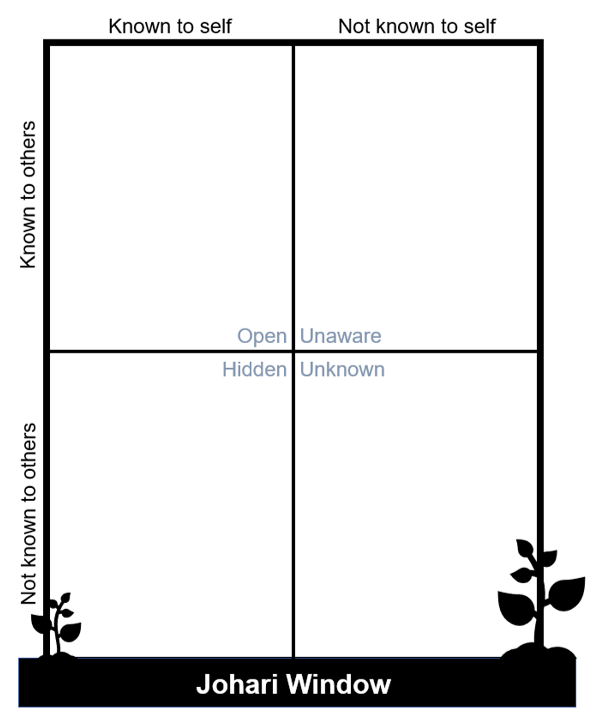
The Johari Window was created by Joseph Luft and Harry Ingham to help individuals increase their self-awareness. Through examining yourself across the four quadrants based on knowledge of yourself and the knowledge others have on you, you can start to understand how others see you and increase your confidence as you navigate your career.
How it might help with my career?
Self-awareness is an important reflection tool for managing career growth, and identifying potential and barriers to success. Likewise, finding congruence between how you see yourself and how others see you can aid your continued development as you seek feedback, share goals, and identify potential.
How do I use it?
Start to fill in each of the four quadrants as you are able. Some of the quadrants may be hard to initially fill in, but below is some guidance to help you get started:
- Open: this contains traits, competencies, and accomplishments that you know of (known to self) and are visible to others as well (known to others). This area can help you think about your personal brand or help you evaluate opportunities that align with who you are. Expand on this area by gaining additional experiences and sharing information from your “hidden” zone.
- Unaware: sometimes referred to as the “blind spot,” this contains insights about your habits, behaviors, strengths, or preferences that others see (known to others), but you might not (not known to self). Consider using different assessment tools, informational interviews, or seek feedback to help you expand your awareness of what is here.
- Hidden: this section may contain ambitions, goals, fears, or other attributes you might keep hidden away from others (known to self; not know to others). Choosing when and how to disclose this information may take a combination of evaluation and strategy; however, this may contain incredible potential to aid in your future career growth when shared. Use this section to help you volunteer for projects that can reveal your talents to more individuals.
- Unknown: this is the area of intentional self-discovery waiting for an appropriate challenge to stretch you into capabilities you were unaware of. Use this as a reminder to push yourself in new directions, challenge assumptions about your capabilities, and explore unfamiliar areas more intentionally.
What to do beyond this exercise
This exercise is a starting point that will hopefully help you navigate your continued career growth, but this exercise will require a lot of interactions with others to help you develop it. Start to identify mentors and seek feedback from supervisors and others to help you uncover more of the areas that are not currently known to you. Likewise continue to explore areas that might interest you and avoid shying away from challenging tasks you are unfamiliar with as these might highlight additional potential.
What is it?
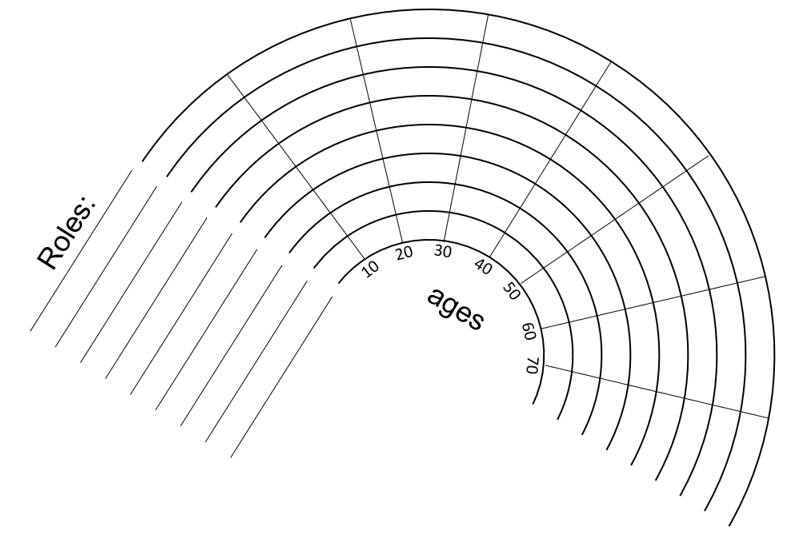
The Life Roles Rainbow was developed by Donald Super to help individuals see the progression of their different roles, and subsequent balancing, across their lifespan. Super started with nine separate roles (Child, Student, Worker, Citizen, Homemaker, Parent, Partner/Spouse, Leisurite, and Pensioner), but this worksheet is intentionally left blank so you can label different roles based on how you might classify your own life.
How might it help with my career?
At different points along your life, you may assume different roles or functions that may compete for your time and attention. Mapping out your roles will help you reflect on how you balanced some different roles in the past and may help you anticipate potential challenges as your roles change or responsibilities increase in the future.
How do I use it?
Start by listing off some of the roles you already occupy (or have occupied). Using Super’s existing roles, as a college student, you might have the roles of “child” and “student” already listed. In the timeline, color or shade-in the ages you have actively been in that role. You might draw a thicker line for a particular role if it dominated a particular time. Likewise, you could lighten/darken the line to indicate something similar.
If you anticipate any future roles, feel free to list it and the potential age you ideally would like to take-on that role. This might be something you hope or expect to take on.
You might also want to adjust the “ages” on the timeline to reflect a specific subset you would like to focus on. For example, if you want to focus on the previous decade of your life through the next decade of your life, you can.
While Super had preset roles, you might choose to add in other roles as you feel it helps you with balancing your different responsibilities. You might opt to include roles such as “roommate,” “caregiver,” or “club president.”
What to do beyond this exercise
This is both a reflection and planning exercise. You may want to invite a mentor or someone older who you admire to do a similar exercise—to potential seek their wisdom on how they managed to balance all of their different roles and responsibilities. Similarly, you might want to share your completed exercise with them to inquire about any patterns they see or could anticipate for you.
No matter how much you plan or anticipate your roles and responsibilities, life can sometimes add in new roles or responsibilities that you did not plan for. As you reflect on your past or anticipate your future, try to build in a bit of flexibility/adaptability. And if you can’t adjust, at least try to develop some self-compassion for what you had to choose to do at the time.
What is it?
These four exercises allow you to have a little bit of fun when it comes to selecting a major (or field of study). This resource includes three different activities:
- Scavenger hunt: by finding different alumni using tools like LinkedIn, the Directory, or Advisor’s Hub, you can discover how non-linear career paths can be for some individuals based on different characteristics, occupations, or experiences.
- Major bingo: compare and contrast different majors using a bingo card to help you align how the fields of study match up with things that are important to you.
- Get social: learn how simple immersion and observation can assist you in evaluating whether a field of study is right for you.
- Decision list: compare up to three different majors on a variety of metrics. Use the template provided or use it as inspiration to create your own!
How might it help with my career?
Finding alignment between your field of study and your personal preference can help make your development within the field seem effortless. Matching up how your values, interests, personality, and skills connect back to different majors can help you make a well-informed decision. Regardless of what you ultimately choose as your major or field of study, keep in mind that career pathways are inherently non-linear. Take, for example, many of the alumni featured as part of the Infinite Careers series.
How do I use it?
What to do beyond these exercises
Keep an open mind. Many of the experiences and skills you will develop during your studies help to build different parts of your career identity that create a facet of your overall identity. So avoid feeling trapped by your field of study and continue to think about how it helps to build transferable skills that can help you all throughout your life.
What is it?
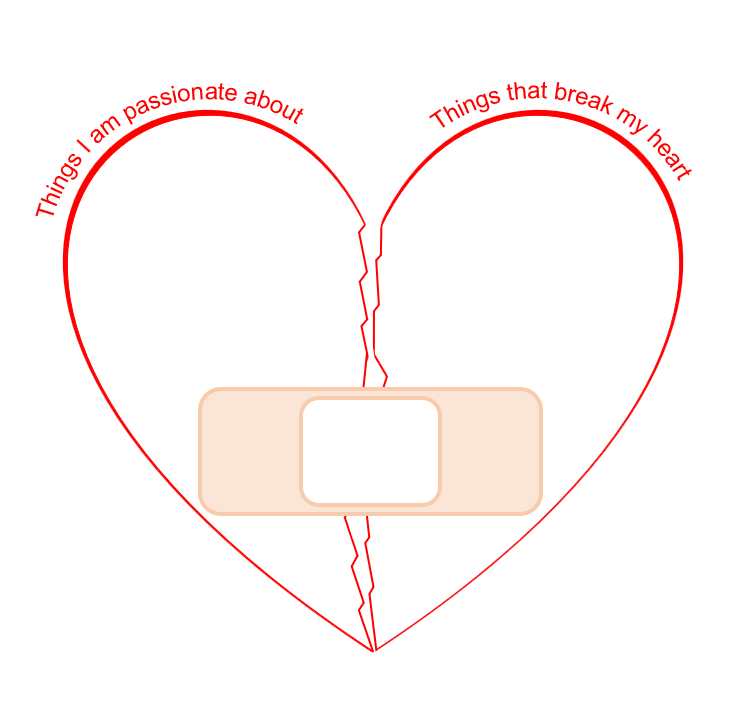
Map your heartbreak is an exercise developed by Learning to Give (learningtogive.org) that helps individuals identify issues or causes that really matter to them.
How might it help with my career?
Identifying areas that are important or meaningful to you can help you focus your professional development on topics that you feel motivated to support.
How do I use it?
- On the left-side of the heart, indicate things you are passionate about. You can list, draw, or add images to represent your ideas. You might also use the following questions to help you ideate:
- What, where, or who makes you happy, and why?
- What are you proud of or feel fulfilled by?
- Who do you love or admire, and why?
- What’s the most fun or rewarding experience you have ever had, and why?
- What’s your favorite memory? What fills your heart with joy?
- What is something you own or possess that you truly cherish, and why?
- On the right-side of the heart, indicate things or topics that “break your heart.” These could be causes or issues you feel need to be addressed for you, your family/social circle, your community, or beyond.
- Around the heart, write or draw your ideas for ways to merge your interests and passions with the causes you care about. Here are some sample questions to help guide your reflections:
- What are things you might do that can help make a difference?
- How might your strengths, talents, or abilities aid or lend support to these issues?
- Which people or places need support? Which of these can you support now?
- What resources or groups on campus might you partner with to amplify support?
- Finally, on the bandage, try to come up with one simple thing you can do right now to help aid a cause that motivates you. It could be your personal call-to-action, or a word or phrase that you might continue to reflect on.
What to do beyond this exercise
Sometimes the issues that truly break our hearts are not quickly or easily fixed. Don’t be discouraged! You have time across your life to lend support and affect change. Small changes, consistent action, and focusing on what you can personally contribute to can all help. We encourage you to reflect on this exercise as you identify career pathways, organizations you want to work for or affiliate yourself with, and ways you might want to further develop professionally. Likewise, share your findings with your peers, mentors, and supporters to gain additional insight into ways you can make a difference on the issues that you most care about.
What is it?
While you may have many different tasks clamoring for your attention, being able to manage your time effectively can be beneficial to help improve focus and reduce stress. The pomodoro technique is about breaking out tasks into discrete blocks of time that allow you to focus on a singular task as opposed to being divided in where you can place your attention.
How might it help with my career?
In addition to being an effective time management tool, this technique can help you navigate and balance multiple career-related tasks including planning exercises, job searches, completing applications, and interview preparation.
How do I use it?
What to do beyond this exercise
While time management is beneficial across multiple aspects of your career, consider combining this technique with some of the other activities listed on this page.
What is it?
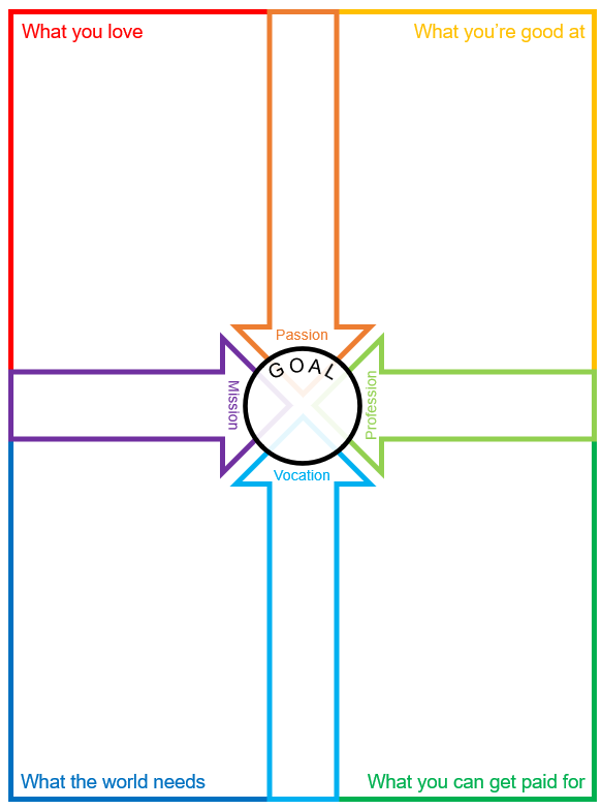
This is a westernize approximation, usually depicted as a Venn diagram, of the Japanese concept of ikigai (or a “reason for being”) that can help individuals ideate their potential “purpose”. The four circles of the Venn diagram usually ask “what you love,” “what you are good at,” “what the world needs,” and “what you can get paid for” as a way to help individual evaluate career options.
How might it help with my career?
You might feel that asking yourself “what do I want to do for a career,” might be too big of a question. By chunking out the question into smaller pieces, you might be able to further ideate on how the different parts might come together to shape a career you would like to have. This exercise might help you shift your perspective and help you consider additional areas for exploration and inquiry.
How do I use it?
- Start by ideating aspects or qualities within each of the first four quadrants (i.e. indicate what you love, what you’re good at, etc.). Here are some sample questions that might help guide your self-appraisals:
- What you love: How do you spend your free time? What activities do you typically seek out? What do you enjoy reading about or researching? What has brought you joy?
- What you’re good at: What skills appear to come naturally to you? What do people usually seek your help with? What skills or abilities do you dedicate the most practice time to? What abilities do you have that are unique to your peer group?
- What the world needs: What problems in society do you most long to fix? What positive changes do you see in the world? What challenges exist that move/motivate you?
- What you can get paid for: What services are people paying for that align with your abilities? What jobs connect back to your daily activities? What value can you bring to another person, group, or community?
- Next, try to identify qualities/aspects you can merge into the corresponding sections between the quadrants. Between the quadrants, try to come up with overlaps or similarities between the two categories and write them down within the arrows between quadrants. For example, if you love animals and you are good at understanding medicine, you might list ‘veterinary medicine’ inside the ‘Passion’ arrow.
- If you happen to see similarities between your passions, professions, missions, and vocations, try to connect all four of them to identify a “goal”.
What to do beyond this exercise
Depending on the quality and quantity of your life experiences, it might be challenging to fully fill out a worksheet like this, but do not get discouraged! If you find difficulty connecting qualities from the four different quadrants to one another, use this as a way to identify additional areas you might want to explore. Filling out the quadrants more and more may help you find additional connections between them.
For example, if you recognize that solutions to the housing crisis is something that the world needs, but are having difficulty thinking about “what you can get paid for” or “what do you love,” use this as a motivator to guide your exploration. You might look at jobs that exist that might support remedies to the housing crisis; or you might think about what is something about this need that you truly love (e.g. figuring out the financial implications of it, listening to the stories of others and helping people, etc.).
What is it?
Whether online, a card-sort, or “paper-and-pencil”, assessments typically try to help you identify your values, interests, personality, or skills by asking you a series of questions or taking you certain exercises.
How might it help with my career?
While some assessments (e.g. Strong Interest Inventory) directly connect to your career interests, other assessments might help you obtain another perspective on who you are, what you like, what your values are, or what you might be skilled at. In a way, assessments can be a structured self-reflection tool that helps you uncover new ways of thinking about who you are and how you might behave. Understanding your preferences can offer you insights into the types of teams you might like to work on, what types of projects you might like to be assigned, or your communication style.
How do I use it?
What to do beyond this exercise
While many assessments may help you feel empowered or offer clarity, try to avoid allowing the results to limit your potential or ability to adapt. Use the assessment results to complement your self-awareness but understand that you will continue to grow, change, and flourish across your life.
What is it?
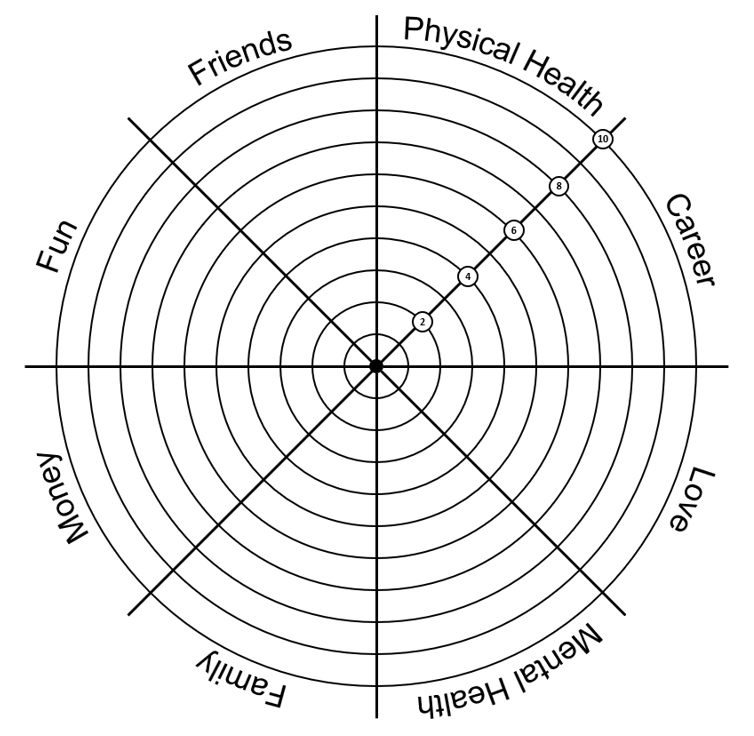
The wheel of life is a coaching tool to help you understand how key aspects of your life are (or are not) in balance in terms of your perceived satisfaction with each area. While you can use the wheel for your own personal reflection, it can also be helpful for you to prioritize what resources/support you might need to seek out.
How might it help with my career?
Assessing your level of satisfaction with different areas of your life can help you identify where you might need to dedicate additional time and effort. Understanding what you may want to work on can also help you align your values, prioritize your time, and help you set more intentional goals. You might also use it to evaluate decisions you need to make to ensure that they don’t negatively impact areas you are concerned with.
How do I use it?
Rate your level of satisfaction in each different octant of the circle (on a scale of 1-10). The circle has preset labels, but feel free to adjust based on what is truly important to you. Here are some common areas to assess:
- Physical health or body: how are you feeling physically? Think about your energy, sleep, fitness, nutrition, or other aspects of your physical wellbeing.
- Career or studies: how is your work or studies? How are you feeling about generating a sense of purpose? This can also cover your own ideas around professional development.
- Love or romantic relationships: how do you feel about your love life? Are you getting the emotional connection you need?
- Mental health or psychological wellbeing: how do you feel about your overall mental health or psychological wellbeing?
- Family or community: how do you feel about your connection to your family or community? Do you have people you can call upon for general support if needed?
- Money, finances, or resources: how do you feel about your general financial well-being? Do you feel as though your basic needs are met?
- Fun or joy: how do you feel about your general enjoyment and pleasure in life?
- Friends or relationships: how are you feeling about peer support or similar relationships?
If you can, try to push your ratings to the extremes; sparingly assigning ratings towards the middle. This will help you identify areas of satisfaction against areas of dissatisfaction.
What to do beyond this exercise
Periodically checking in on your well-being across different aspects of your life can help you prioritize where you might want to dedicate additional time/resources. Some areas listed may not be important to your overall satisfaction and that is okay! You may also want to track the seasonality of some of these areas as you might notice trends on how you allocate your attention differently throughout the year.
Playing with your career can be either an individual or group effort. If you doing these on your own, find an environment that will help you relax, focus, and have a pleasant time. If you are doing these alongside others, find ways to drive interaction and have spirited conversations with each other. Although many of the above items are suitable for a single player, level-up by joining others to play along with you too! Consider looking for an upcoming Career Play Time event, or come to one of our drop-in hours to get the support you might need.
Erik Pavesic is the Assistant Director of Career Advising & Training and in addition to being a certified Gallup Strengths coach is also trained as a LEGO® Serious Play® facilitator.
